
A massive mudslide near the China-Nepal border in Tibet has left three people dead and 588 missing. Chinese President Xi Jinping has ordered all-out rescue efforts, with the PLA mobilising forces for search and relief operations in the affected Gyirong County. The Indian Embassy has also issued an advisory for stranded Indians.

A massive flash flood near the China-Nepal border in Tibet has left hundreds missing and caused significant casualties. Chinese Premier Li Qiang visited the affected Gyirong Township to oversee rescue and relief operations, with the PLA mobilising forces for search and rescue.

China has issued a Level-IV alert due to a newly formed barrier lake at the Tibet-Nepal border, warning of a high risk of breaching and flooding downstream areas. The lake, formed at the confluence of Chhochen Khola and Purepu Tsangpo rivers, has accumulated an estimated two million cubic metres of water, with inflows expected to increase, raising concerns for areas including Gyirong Port.

In July, tension emerged in Taksing, a remote village in the Upper Subansiri district of Arunachal Pradesh after locals sighted PLA soldiers.

Nepal is grappling with one of its worst disasters in recent years as massive flash floods, triggered by an ice avalanche, have claimed 270 lives and left thousands missing across multiple districts, prompting urgent rescue and relief operations.

India and China have agreed to advance discussions on an "Early and Substantial Harvest" of boundary delimitation and border management during the 25th round of Special Representatives talks between National Security Advisor Ajit Doval and Chinese Foreign Minister Wang Yi in Beijing. Both sides reached an eight-point consensus, committing to the 2005 Agreement on Political Parameters and Guiding Principles for Settlement. Key outcomes include enhancing border management, improving understanding of the Line of Actual Control, establishing new meeting points and hotlines, and continuing cooperation on trans-border rivers and pilgrimage.

Xi commended the battalion members for their remarkable efforts in guarding China's border region, noting that they have dedicated their youth to securing the country's territorial integrity and have accomplished their missions well, state-run Xinhua news agency reported.
'We won not (only) because we were able to carry out long-range precision strikes.' 'That is, of course, one of the reasons but we had better situational awareness about what's happening than Pakistan.'
Gen Wang is the fourth commander to head the Western Theatre Command after the eastern Ladakh standoff began in May last year.
About 30 airports have been either built or under construction in Tibet and Xinjiang provinces which will boost China's civil and military infrastructure in the remote regions bordering India, the country's official media reported.

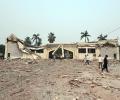
The 7.9 Richter Scale temblor that struck Nepal on Saturday also affected parts of Tibet. The two border ports to Nepal were seriously affected.
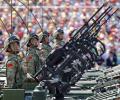
The move took place late last month and involved hardware being moved simultaneously by road and rail from across the entire region.

'Tibetans will participate in future conflicts with India (in all probability, some were already present in Galwan).' 'As nobody in India would like to have a deadly fight with Tibetan soldiers and officers, the issue needs to be closely followed,' observes Claude Arpi.

'Intrusions by PLA troops in the Ladakh sector are more in number than elsewhere and this region is now likely to remain an area of enhanced Chinese interest,' warns China expert Jayadeva Ranade.

The fierce battles of Galwan, Rezang La, Gurung Hill, and Walong taught the PLA a hard lesson: Fighting the Indian Army would never be easy or inexpensive.
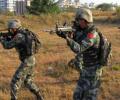
The brigade that conducted the drills was from the PLA's Tibet Military Command and is one of China's two plateau mountain brigades.

India was fooled into believing that Communist China wanted a 'negotiated' settlement with the Tibetans; it was never the case, says Claude Arpi.
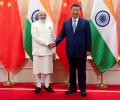
'China's basic purpose of taking the Shaksgam Valley was access to the Indian Ocean.'
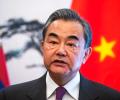
Was Wang Yi'S visit intended to remind India of 1962, asks Claude Arpi?

In the review meeting, Singh told the top military brass to continue to deal with the situation in eastern Ladakh and other areas with "firmness".
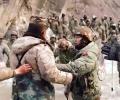
According to the 'Military and Security Developments involving the People's Republic of China' report 2023: "Since early May 2020, sustained tensions along the India-China border have dominated the Western Theater Command's attention."

Defence Minister Rajnath Singh held two-back-to-back meetings with top military brass on Tuesday deliberating on the situation in eastern Ladakh after an Indian Army officer and two soldiers were killed in a violent clash with Chinese troops in Galwan Valley.
'If they can be duplicitous, we can be equally duplicitous.' 'If they offer friendship, we reciprocate.' 'If they choose hostility, we respond with equal hostility.'

Sources said the Indian delegation was warmly greeted by senior officials of the Chinese Army before the talks began.

The arrival a couple of days ago of a Chinese nuclear submarine for the first time in Karachi port, coinciding with a Chinese military delegation's visit, points to Pakistan's importance for China, says former R&AW officer Jayadeva Ranade.

The defence minister visited the forward areas at a time when China is upgrading its infrastructure along the border.
Chinese President Xi Jinping has bestowed special honours on a PLA battalion posted in Tibet close to Arunachal Pradesh for its "outstanding performance in safeguarding borders".

The Tibetan nation still lives under the yoke of the Chinese Communist Party, and Beijing today has a guilty conscience; this creates a great uneasiness for Xi Jinping and his colleagues observes Claude Arpi.
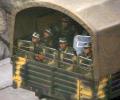
The intrusions into India were likely carried out by the PLA's better trained and equipped 'mobile operational units'.

Lieutenant General Shakti Gurung deserves to be complimented in telling his life story and that of his people, as subaltern communities within this vast and diverse nation of ours clamour for recognition and a plea for their voices to be heard and their aspirations to be met, notes Lieutenant General Gautam Moorthy.

General Zhao Zongqi is well known in India for having commanded the Chinese troops during the Dokalam episode. Zhao knows every inch and corner of the Indian border, at least the Eastern and Central sectors, including the Naku La area which witnessed fist-fights between Indian and Chinese troops in April/May. Claude Arpi introduces us to the PLA generals masterminding the Chinese aggression in Ladakh.

Lt Gen Kalita also stated that the Army is constantly monitoring the activities across the border and is well prepared to meet any emerging challenges.
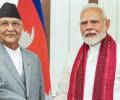
Nepal's claim on Lipulekh and Kalapani reopens a 200-year-old border dispute, while historical maps and treaties show the area belongs to India, asserts Lieutenant General Shakti Gurung (retd).
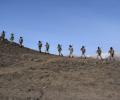
Asked about the reports of the troops on both sides disengaging and moving back to their previous positions, Chinese foreign ministry spokesperson Hua Chunying told a media briefing in Beijing that both sides are taking steps to ease the situation along the borders.

China supplied more than $20 billion worth of arms to Pakistan. These include 20 J-10CE and JF-17 Block III fighter aircraft, Wing Loong drones, frigates, submarines, Hongqi HQ-9P surface-to-air missiles, 240 PL-15E air-to-air missiles, LY-80 air defence systems, ZDK early warning aircraft and other weapons.
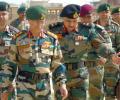
The main focus will be on the situation in eastern Ladakh where Indian and Chinese troops are locked in an eyeball-to-eyeball face-off in sensitive areas like Pangong Tso, Galwan Valley, Demchok and Daulat Beg Oldie
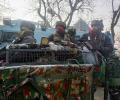
'On the LAC, China can undertake military action at any place with much fewer resources. It can do 'salami slicing'.'
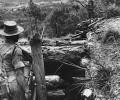
On November 18, 1962, 114 soldiers of the 13th Kumaon fought till the last man, and last bullet, in sub-zero temperatures, to beat back the huge Chinese army. We salute the Heroes of Rezang La.

In underlining the role of border villages as custodians of India's frontiers, New Delhi is following China's example in Tibet.

Samdong Rimpoche's visit to China materialised against the backdrop of strained India-China relations consequent to the face-off between Indian and Chinese troops at Doklam, says former RAW officer Jayadeva Ranade.
